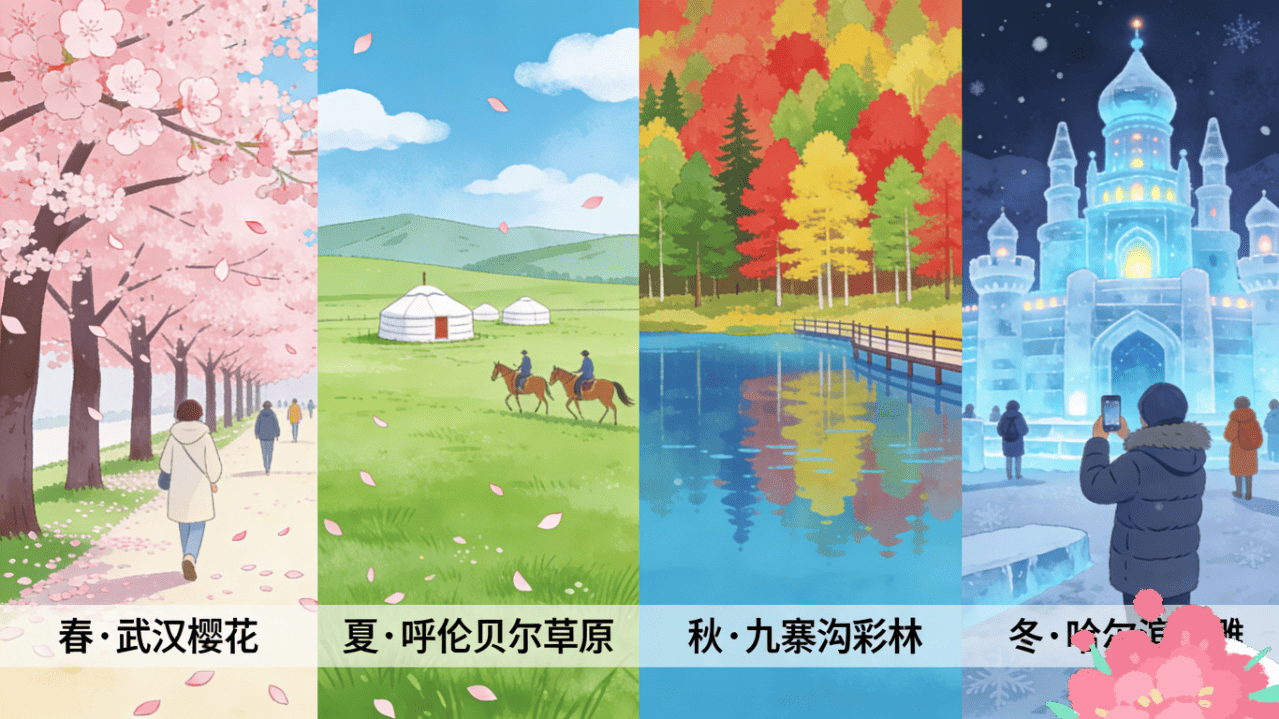
China, a land of staggering geographic and cultural diversity, spans tropical coasts, snow-capped mountains, ancient imperial cities, and vibrant modern metropolises. With such a vast landscape, the best time to visit China varies dramatically by region—what’s perfect for a Beijing temple tour might mean monsoon rains in Guilin or freezing temperatures in Harbin. This guide breaks down China’s seasons, regional weather patterns, top destinations by month, and pro tips to help you plan a seamless trip, whether you’re chasing cherry blossoms, golden autumn foliage, winter ice festivals, or summer mountain escapes.
Quick Answer: The Best Overall Time to Visit China
For most first-time travelers and general sightseeing, spring (April–May) and autumn (September–October) are the unbeatable sweet spots. During these months, temperatures across most of China hover between 15–25°C (59–77°F)—mild, dry, and perfect for walking tours, hiking, and exploring cities. Skies are clear, crowds are manageable (excluding national holidays), and the landscape is in full bloom (spring) or ablaze with fall color (autumn). These seasons work for classic itineraries featuring Beijing, Shanghai, Xi’an, and Guilin—China’s most popular tourist hubs.
China’s Four Seasons: What to Expect & Where to Go
China’s continental size creates four distinct seasons, each with unique highlights and challenges. Below is a season-by-season guide to weather, top destinations, and travel tips to help you choose.
Spring (March–May): Blooms, Fresh Air & Mild Exploration
Weather: Cool to warm, with rising temperatures (10–26°C/50–79°F). Northern China may have occasional dust storms; southern and eastern China sees light rain and fog in mountain areas. Humidity is moderate, and the country bursts with cherry blossoms, rapeseed flowers, and peonies.
Top Destinations:
- Wuhan & Nanjing: Famous cherry blossoms (March–early April) draw visitors worldwide.
- Wuyuan (Jiangxi): Vast rapeseed flower seas paint the countryside golden (March–April).
- Luoyang (Henan): Peony blossoms—the “national flower of China”—bloom in full glory (April).
- Beijing & Xi’an: Comfortable temperatures for exploring the Great Wall, Forbidden City, and Terracotta Army (avoid early March dust storms).
- Guilin & Yangshuo: Misty Li River landscapes and fresh greenery (April–May, after light spring rains).Pro Tips: Pack a light windbreaker, long-sleeve tees, and a compact umbrella for southern rain. A dust mask is useful for northern China in early spring. Avoid Qingming Festival (early April)—a short national holiday with minor crowds.
Summer (June–August): Heat, Humidity & Scenic Escapes
Weather: Hot and humid across most of China, with temperatures hitting 30–35°C (86–95°F) in southern “furnace cities” like Chongqing, Wuhan, and Guangzhou. Coastal regions (Shanghai, Fujian) face typhoons and monsoon rains; the Yangtze River basin has a month-long “plum rain” season. Western and northern highlands stay cool, making them ideal summer getaways.
Top Destinations:
- Hulunbuir (Inner Mongolia): Lush grasslands, horseback riding, and nomadic culture (June–August).
- Xinjiang & Tibet: Mild temperatures (15–25°C) and accessible high-altitude landscapes—visit Kanas Lake or Lhasa (June–August is the only warm season for Tibet)
- Huangguoshu Waterfall (Guizhou): Monsoon rains boost water flow, creating a thunderous, dramatic cascade (June–August).
- Qingdao & Dalian: Coastal cities with cool sea breezes and fresh seafood (July–August).Pro Tips: Pack breathable, quick-dry clothing, sunscreen (SPF 50+), a sun hat, and insect repellent. Stay hydrated in southern China; book mountain/highland accommodations early—they’re popular with domestic tourists during summer school breaks. Avoid the Dragon Boat Festival (June)—a short holiday with crowds.
Autumn (September–November): The Golden Season for Travel
Weather: China’s most beloved season—dry, mild, and sunny, with temperatures 15–25°C (59–77°F) in most regions. Northern China has crisp air and stunning fall foliage; southern China stays warm well into November. Rainfall is minimal, and skies are crystal clear—perfect for photography and outdoor activities.
Top Destinations:
- Jiuzhaigou (Sichuan): Calcareous lakes turn turquoise and blue, framed by red and gold maple trees (September–October)—dubbed “China’s autumn wonderland”.
- Kanas (Xinjiang): Nordic-style forests and lakes blaze with orange and yellow (mid-September–early October).
- Beijing & the Great Wall: Golden ginkgoes in the Forbidden City and red leaves on the Badaling/Mutianyu Great Wall (October).
- Huangshan (Anhui): Sea of clouds and red autumn foliage (October–November).
- Suzhou & Hangzhou: Autumn osmanthus blooms fill the air, and West Lake’s reflections are stunning (September–October).Pro Tips: Pack a light down jacket or knit cardigan for cool evenings. Book early for October 1–7 (National Day Golden Week)—China’s biggest holiday, with 700+ million domestic travelers flooding attractions; prices surge, and popular sites get crowded. November is a hidden gem—fewer crowds, lower prices, and mild weather in southern China.
Winter (December–February): Snow, Festivals & Tropical Warmth
Weather: Extreme contrasts—bitterly cold in northern China (-10–5°C/14–41°F) with heavy snow, and mild in southern China (10–20°C/50–68°F) with damp, chilly air (no indoor heating!). Northern cities like Harbin have subzero temperatures, while Hainan Island is tropical and warm.
Top Destinations:
- Harbin (Heilongjiang): World-famous Ice and Snow Festival (January–February)—giant ice sculptures, ice slides, and winter carnivals.
- Xuexiang (Heilongjiang): “China’s Snow Town” with thick snow roofs and fairy-tale scenery (December–February).
- Sanya (Hainan): Tropical beaches, palm trees, and 25°C temperatures—China’s answer to the Caribbean (December–February).
- Lhasa (Tibet): Clear blue skies, fewer crowds, and the sacred Potala Palace in snow (January–February).
- Guangzhou & Xiamen: Mild weather for city walks, street food, and flower markets (December–February).Pro Tips: For northern China, pack a thick down coat, thermal underwear, wool gloves, and waterproof snow boots—moisturizer and lip balm are a must for dry air. For southern China, layer up (no heating!) and bring heat patches for extra warmth. Avoid Chinese New Year (late January–mid-February)—the world’s largest human migration, with closed shops, packed transport, and price hikes.
Monthly Guide: China’s Best Destinations by Month
If you have a fixed travel date, this monthly breakdown helps you match your trip to China’s seasonal highlights:
- January: Harbin Ice Festival, Sanya beaches, Lhasa winter spirituality
- February: Yunnan’s warm lakes (Dali/Lijiang), Chaozhou/Quanzhou ancient city Chinese New Year vibes, Guilin’s clear Li River
- March: Wuyuan rapeseed flowers, Wuhan cherry blossoms, Suzhou’s spring gardens
- April: Luoyang peonies, Yili wild apricot blossoms (Xinjiang), Zhangjiajie’s misty peaks
- May: Shangri-La flower seas (Yunnan), Dunhuang’s Gobi deserts, Chengdu’s giant pandas (mild weather)
- June: Hulunbuir grasslands, Huangguoshu Waterfall, Puzhehei lotus flowers (Yunnan)
- July: Xizang’s Lhasa, Kanas Lake (Xinjiang), Qingdao coastal escapes
- August: Dunhuang-Gansu grand loop, Zhangye colorful Danxia, Sichuan’s Daocheng Yading
- September: Kanas golden autumn, Jiuzhaigou’s early fall colors, Beijing’s mild sightseeing
- October: Jiuzhaigou’s peak autumn, Huangshan’s cloud seas, Tengchong ginkgoes (Yunnan)
- November: Jiuzhaigou’s late fall, Guilin’s quiet Li River, Xiamen’s warm beaches
- December: Harbin’s early snow, Sanya’s peak tropical season, Lhasa’s sacred winter
Key Travel Considerations for Timing Your Trip
- National Holidays = Crowds & Prices: China’s major holidays (Chinese New Year, Qingming, Labor Day, National Day) cause massive domestic travel surges. Book flights, hotels, and attraction tickets 2–3 months in advance if traveling during these periods.
- Regional Climate Diversity: Never plan a China trip based on a single city’s weather. A winter trip to Harbin requires snow gear, while a winter trip to Sanya only needs swimwear and sunscreen.
- Visa & Travel Prep: Pair your timing with China’s visa requirements (check our 2026 China Visa Guide for the latest rules). For high-altitude regions (Tibet, Xinjiang), apply for special permits in advance.
- Packing for Layers: China’s weather can shift quickly—pack lightweight, layered clothing for all seasons. A foldable rain jacket and comfortable walking shoes are essential year-round.
Final Thoughts: There’s No “Bad” Time to Visit China
China’s diversity means there’s a perfect destination for every season. Spring and autumn offer the most consistent weather for general travel, but summer’s mountain escapes and winter’s ice festivals/tropical beaches are unforgettable for adventurous travelers. The key is to match your destination to the season and plan around national holidays for a smoother experience.
Whether you’re chasing cherry blossoms in spring, golden foliage in autumn, or snow and sun in winter, China promises a journey of stunning landscapes, rich culture, and unforgettable moments.