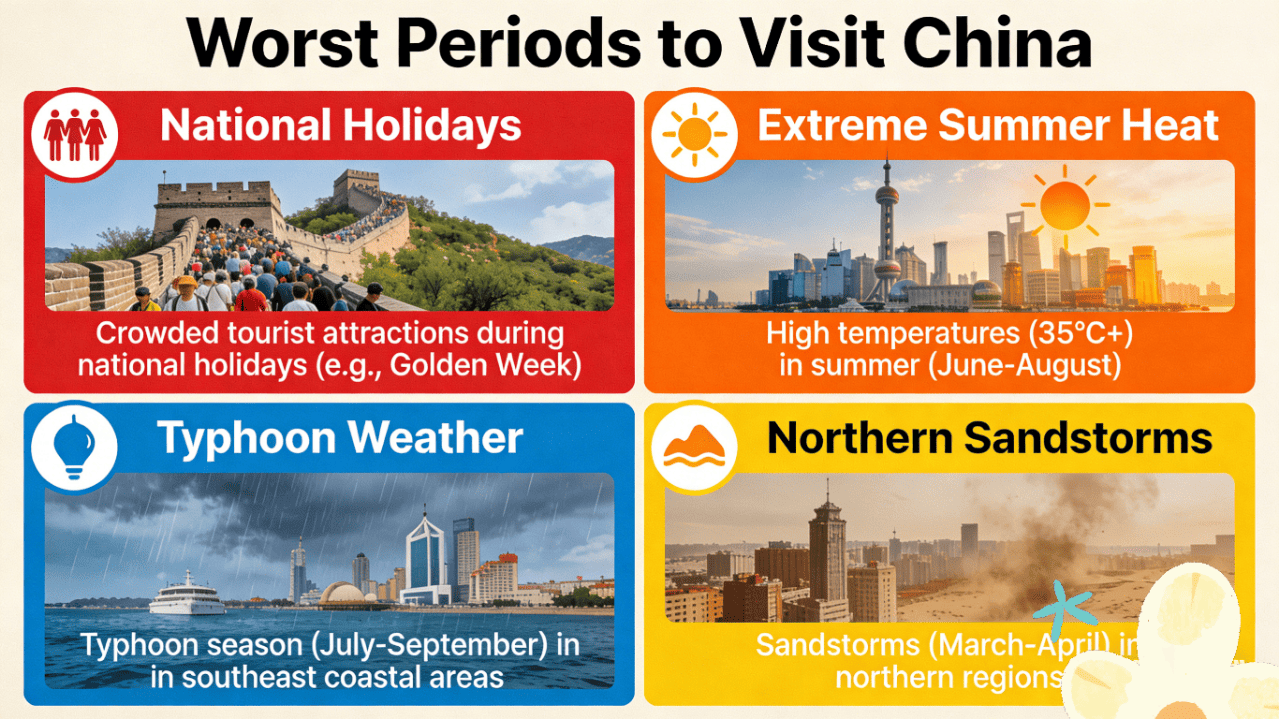
Planning a trip to China should be about joy, ease, and seamless experiences—but timing matters. While China is magical year-round, certain periods pose significant challenges: extreme weather that ruins outdoor activities, crippling crowds that turn top sights into packed scenes, skyrocketing prices with little added value, and logistical nightmares from holiday gridlock. This guide highlights the worst times to visit China, why you should avoid them, and smarter alternatives to ensure your trip goes off without a hitch.
The Absolute Worst Times to Visit China (And Why)
1. Chinese New Year (Late January – Mid-February)
Why It’s Terrible: The world’s largest annual human migration turns China into a travel gridlock.
- Transport Chaos: Flights, high-speed trains, and buses are booked out months in advance; last-minute travelers face inflated prices or no tickets at all. Major airports and train stations are overflowing with locals returning home, leading to endless queues and stress.
- Closed Businesses: Most restaurants, shops, tourist attractions, and even some ATMs close for the holiday. Rural areas and small cities become nearly desolate, while popular cities (Beijing, Shanghai) see a mass exodus of locals, leaving a sparse (but uninviting) vibe.
- Crowded Sights: Iconic spots like the Great Wall, Forbidden City, and Xi’an Terracotta Army are swarmed with domestic tourists. Photos are impossible without strangers in the frame, and waiting times for entry tickets stretch for hours.
- Price Gouging: Accommodation, flights, and tour packages surge by 50–200%. A budget hotel that costs ¥200/night might jump to ¥800+, and guided tours come with steep minimums.
- Weather Woes: Northern China is freezing (-10°C/14°F or lower) with heavy snow; southern China is damp and chilly (no indoor heating!), making outdoor exploration miserable.
Smart Alternative: Visit 2–3 weeks before or after Chinese New Year. You’ll avoid the crowds, get lower prices, and still catch pre-holiday festival vibes (lantern decorations, traditional markets) without the chaos.
2. National Day Golden Week (October 1 – 7)
Why It’s Terrible: China’s biggest summer holiday creates a tourist flood on par with New Year.
- Crowd Levels: 700+ million domestic travelers hit the roads and attractions. The Great Wall, West Lake (Hangzhou), and Huangshan (Yellow Mountain) are so crowded you’ll struggle to move—let alone take a photo.
- Booking Nightmares: Popular hotels, flights, and attraction tickets sell out 2–3 months in advance. If you don’t book early, you’ll pay premium prices for subpar accommodations or be stuck with limited tour options.
- Overpriced Everything: Hotels, restaurants, and tours inflate prices significantly. Street food vendors might skip quality for volume, and guided tours often cut corners to accommodate more tourists.
- Traffic Jams: Highways leading to scenic areas (Jiuzhaigou, Zhangjiajie) face gridlock that can last for hours. Even intra-city travel becomes a slog, with long waits for public transport.
Smart Alternative: Visit late October or early November. The autumn weather is still perfect (mild, dry, clear skies), crowds vanish, and prices drop back to normal. You’ll get to enjoy top sights without the mayhem.
3. Mid-July – Mid-August (Peak Summer Heat & Humidity)
Why It’s Terrible: Unbearable weather ruins outdoor activities for most of the country.
- Extreme Heat & Humidity: Most of China (especially southern and eastern regions) is sweltering—temperatures hit 35–40°C (95–104°F) with humidity above 70%. It’s sticky, exhausting, and makes walking tours (Forbidden City, Summer Palace) feel like a marathon. Heat exhaustion is a real risk.
- Typhoon & Monsoon Risks: Coastal areas (Shanghai, Zhejiang, Fujian, Guangdong) face frequent typhoons, bringing heavy rain, strong winds, and flight cancellations. The Yangtze River basin has a “plum rain” season (late June–mid-July) with nonstop drizzling, mold, and gloomy skies.
- Crowds + Heat = Misery: Domestic tourists flood cool destinations (Xinjiang, Tibet, Inner Mongolia) during summer, making these spots just as crowded as the major cities. Popular hiking trails (Huangshan) are packed, and views are often obscured by haze or rain.
- Bug Infestations: Warm, humid weather leads to mosquitoes and ticks, especially in rural and forested areas (Jiuzhaigou, Guilin). Insect repellent is non-negotiable, and bites can lead to discomfort or illness.
Smart Alternative: Visit spring (April–May) or autumn (September–October) for mild weather. If you must travel in summer, stick to highland areas (Xinjiang, Tibet, Yunnan) where temperatures stay 15–25°C (59–77°F)—just book early to avoid crowds.
4. Early March (Northern China Dust Storms)
Why It’s Terrible: Poor air quality and messy scenery ruin spring plans.
- Dust Storms: Northern China (Beijing, Xi’an, Inner Mongolia) faces frequent sandstorms from the Gobi Desert in early March. The air is thick with dust, visibility is low, and breathing becomes difficult (especially for those with allergies or respiratory issues).
- Muddy, Drab Landscape: The countryside is still brown and barren—cherry blossoms and spring blooms haven’t arrived yet. Outdoor activities (Great Wall hikes, city tours) are uncomfortable, and photos come out hazy and dull.
- Limited Attraction Access: Some outdoor attractions (mountain trails, parks) may close temporarily due to poor air quality or safety concerns.
Smart Alternative: Visit late March or early April. Spring blooms (cherry blossoms, rapeseed flowers) are in full swing, dust storms subside, and weather is mild and pleasant.
5. Late November – Early February (Southern China Damp Cold)
Why It’s Terrible: Miserable cold with no relief for southern travelers.
- Damp, Chilly Weather: Southern China (Guangzhou, Shanghai, Guilin) has no indoor heating during this period, and the air is damp and cold (5–15°C/41–59°F). It’s a “wet cold” that seeps into bones, making even short walks feel freezing.
- Limited Scenic Appeal: Most outdoor attractions are lackluster—Guilin’s Li River is less vibrant without spring greenery, and Suzhou’s gardens lack the bloom of spring or autumn.
- Low Season Lulls: Many small businesses, local markets, and even some tourist attractions reduce hours or close, limiting your ability to experience local culture.
Smart Alternative: Visit late February (post-Chinese New Year) or early March. Southern China warms up, spring blooms start to appear, and crowds are gone—plus, you’ll avoid the worst of the cold.
Key Takeaways: Avoid These Mistakes
- Steer Clear of Major Holidays: Chinese New Year and National Day Golden Week are best avoided unless you’re prepared for crowds, inflated prices, and logistical stress.
- Prioritize Mild Weather: Spring (April–May) and autumn (September–October) are the only times when most of China has comfortable weather—stick to these seasons for stress-free travel.
- Plan Around Regional Extremes: If traveling in summer, avoid southern lowlands; if traveling in winter, avoid northern China (unless you’re visiting Harbin for the Ice Festival).
- Book Early (For Good Times): The best travel periods (spring/autumn) are popular—book flights, hotels, and tours 2–3 months in advance to secure the best prices and availability.
China is worth visiting at the right time. By avoiding these worst periods, you’ll save money, reduce stress, and make the most of your journey to this incredible country.